
Introduction
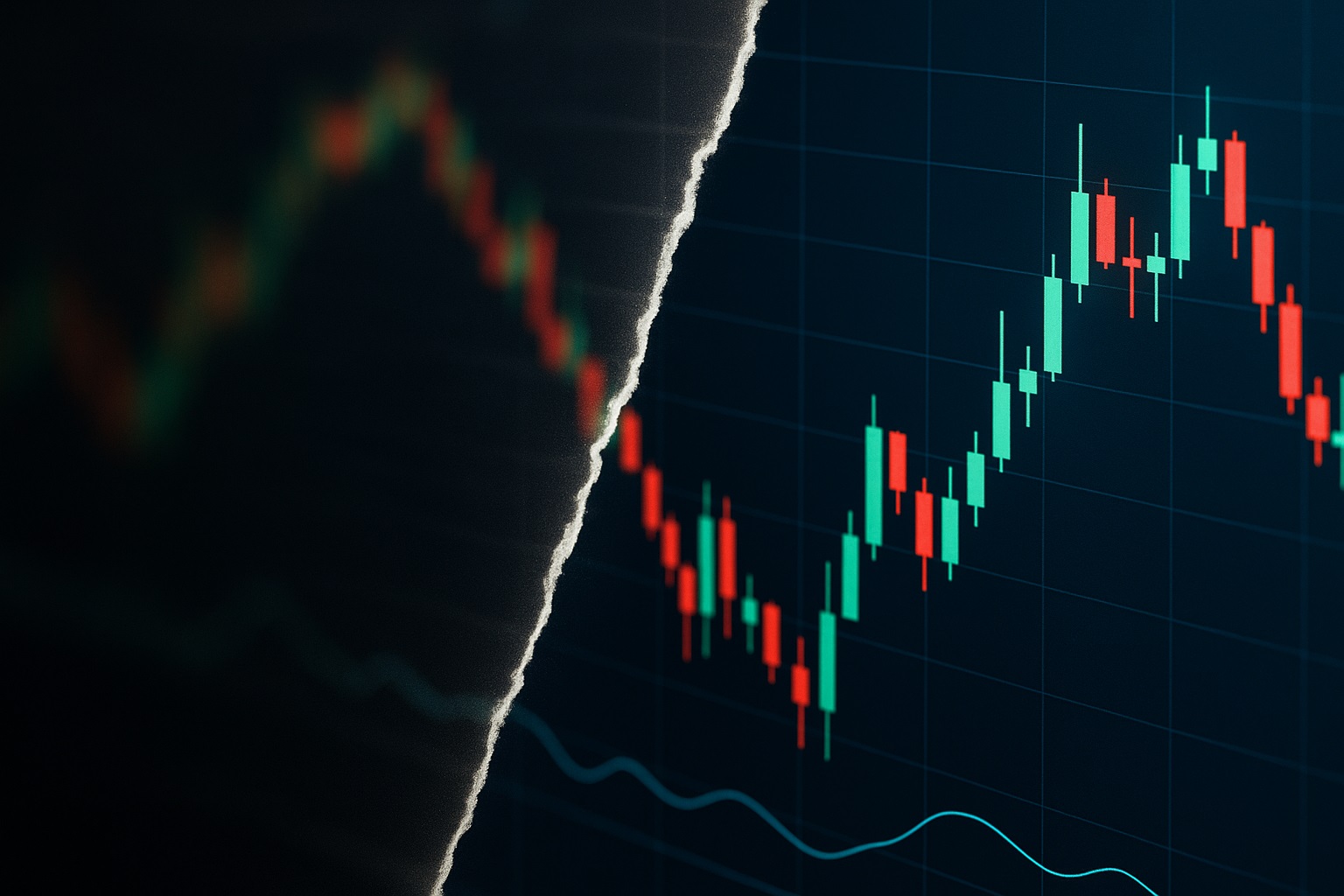
If you have spent enough time in trading communities, you will eventually hear or read someone declaring that technical analysis is dead or otherwise not working anymore. They often will show you some convincing but limited in time evidence, false breakouts, choppy market conditions or even some U.S. presidential declaration that ruined a trader’s day.
This is common and can become a trap for many traders of all experiences. Some of them might give up a specific system after a slump, which happens to all and every systems, or even switch their system every other week in search of a holy grail. Many others can even get to the conclusion that this is an insider or institution game and only them can succeed.
I will be tackling my take on the idea that technical analysis has lost it’s edge in today’s market.
Not only I believe this is wrong, but I believe it stops many traders in early stage from developing a working edge over the market.
The myth
“Technical analysis doesn’t work anymore because markets are too volatile, manipulated, algorithm driven or news dependent” Whichever version you have heard of.
That myth gets in your conversation feed these ways:
- “Charts don’t matter, everything moves because of news”
- “Smart money algorithms invalidate all retail signals”
- Patterns don’t work anymore, the markets have changed too much”
- “Technical analysis is outdated, fundamentals drives everything now”
Here is a good punch line of what I would call a “rage quitter”
“If technical analysis worked, everyone would be rich!”
That one demonstrates how much this business is driven on hype and appeals many people towards a gambling mindset.
Why is it dangerous?
That belief is not necessarily dangerous if you’re going to quit. It however will prevent you from many great learning opportunities. Here are examples of how it can become risky anyways.
It creates a constant system-hopping behaviour
If every losing streak convinces you that “technical analysis is not working” you will never stay long enough to prove a system’s edge is working.
You will never learn from errors you have made in the past.
The problem could be so many reasons! Here is what I can get you on top of my mind:
- Inadequate entries
- Not following your rules consistently
- Overlooking the importance of the exits
- executing trades with your emptions. I have a whole section on what these trades are.
- Ignoring the volatility or volume factor.
- Moving your stop-losses and take profits with no strict rules
Those are all mistakes a trader can fix and work on so he gets better over time.
It can transform trading into gambling
Without a structured method, rules to follow and control over his emptions, a trader can easily start trading anything or everything in hopes that the odds will turn in his favor. I’ve been there in my debuts, it’s very rapidly expensive.
It can lead to the belief that a normal drawdown is a complete failure of his technical analysis.
Drawdown ≠ failure.
Drawdown = statistics.
That belief can make you ignore the reality that institutions are also using technical analysis!
Banks, edge funds, prop traders most often use:
- Some kind of volatility mesure
- Some modeling on what a trend looks like
- Triggers or alerts when a breakout happens
- Calculated stops
- Strict exit strategies
My take on the myth
First of all, Technical analysis is not a prediction, it’s statistical probability. Often beginners will believe that the analysis is a prediction like a crystal ball. It’s not! Technical analysis is used to calculate a statistical edge over the market, something that happens to give profits, more often then losses. It never is a certainty.
Secondly, the market structure has not changed, the human behavior have not changed. Fear, capitulation, greed, impatience. Humans had it in the 20th century as well as now.
Third point, technical edge depends on conditions, not hope.
Just like your trend trading system works when the market is trending, your breakout system will work when a breakout occurs and a reversal system will work when the trend stops.
All of these types of systems will fail when the conditions are not met. Apply the right tools in the right conditions to get the right results is key to achieve an edge on the market.
Forth, technical analysis is simply the analysis of the price, it’s action, past or present. It’s not a crystal ball, not astrology or a guess show. It analysis the price, the volatility, the momentum and the probability of what is gonna happen next considering these factors.
Now what you can do with that information.
If you indeed fall into that trap and have not given up on trading just yet, I encourage you to start using a methodology, use a journal, write down what you see when taking a decision, what you can expect. You do it enough times and you will have real data to be able to improve upon.
Another crucial thing that should be taken in consideration is the specialization. instead of heading to that new so powerful strategy that youtuber came up with this week, make sure that what you look for matches a specific type of trading. For instance, if you start developing a trend trading strategy as I believe you should, skip the reversal or breakout tools. Don’t try to practice everything at once. Become proficient in one style of trading before moving to another one.
Don’t overfit! Overfitting is the technical analysis’s nemesis. When you start optimizing your algorithm, it’s easy to aim for these very perfect settings that will give you 80% win rate on EURUSD on that 6 months time period. However, when that setting is too tight on some specific conditions on a specific time frame, it will become a bad signal when applied to another pair or even when the market moves at a different pace.
Never neglect another pillars of trading! Money management makes an “ok” system a good one when done right. Set a maximum risk for each trade, set the stop carefully, make sure you are following all the rules you have to all along.
Make sure your psychology is not interfering on your system! It sounds easy but when more and more money is involved, FOMO trades, early exits and bad behaviors become more and more a problem.
Lastly, you have to learn to accept that once you entered the market, you have no power over the actual price. It is a big part of a trader’s journey to become a successful trader.
The algorithmic perspective
Algorithmic trading has the capability to provide you with the best evidence that technical analysis works.
- Algorithms are based on technical rules to enter and exit trades. Tools like indicators or support and resistance lines are the pillar of these systems.
- They often can provide you with a descent backtest data sample to know, understand and see the edge over the market. It can be measured easily with key metrics such as win rate, payoff ratio and profit factor.
- The data extracted from backtest, or even better, real results, demonstrates that technical analysis is timeless.
- When your rules are always the same, your edge will stay the same! When you trade in he format of an algorithm, you always do the same things, for the same reasons, consistently. That is the base of a working algorithm.
Conclusion
That claim that “technical analysis is not working anymore” is just not true. In my perspective, it is not only still relevant, but measurable, scalable and most importantly in my opinion based upon statistical data.
The markets might evolve, but humans sure don’t evolve as fast. Don’t let your psychology ruin your edge over the market. Trade with a system, measure it, evaluate it’s success and then trade it over time.
Technical analysis is the most common way for successful traders to earn money on these difficult markets.
Technical Analysis is not dead, sloppy trading is!